2004 Toyota Sequoia
Recalls, most-reported problems, crash-test ratings, fuel economy and what a 2004 Toyota Sequoia is worth — from official NHTSA and EPA data. 107 on record.

2004 Toyota Sequoia at a glance
Included: that car's specs and build sheet, model-year recall campaigns and a fair price.
2004 Toyota Sequoia recalls 9
Tenneco Automotive (DRiV) is recalling certain aftermarket ball joints for 2004-2007 Toyota Sequoia and 2004-2006 Toyota Tundra vehicles, MOOG part number K80521, K80522, NAPA part number NCP2601633, NCP2601634, ACDelco part number 45D2344, and 45D2345. The ball joint housing may have inadequate hardness, causing premature failure.
Fix: DRiV will work with distributors to return unsold parts. Dealers will inspect and replace the ball joint as necessary, free of charge. Owner notification letters were mailed on March 17, 2022. Owners may contact DRiV customer service at 1-877-489-6659 or at RECALL.SUPPORT@DRIV.COM.
Toyota Motor Engineering & Manufacturing (Toyota) is recalling certain 2010-2016 4Runner, 2003-2006 Tundra, 2003-2013 Corolla, 2009-2010 Corolla Matrix, 2004-2005 RAV4, 2002-2007 Sequoia, 2011-2013 Sienna, 2008-2012 Scion xB, 2008-2009 Lexus IS-F, 2007-2012 Yaris and Lexus ES350, 2010-2017 Lexus GX460, 2002-2010 Lexus SC430, 2006-2012 Lexus IS250 and IS350 and 2010-2015 Lexus IS250C and IS350C vehicles. These vehicl…
Fix: Toyota will notify owners. Depending on the vehicle model, dealers will replace the front driver inflator, front passenger airbag inflator, the airbag assembly, or the front passenger airbag sub-assembly and inflator. The recall began November 20, 2019. Owners may contact Toyota customer service at…
Toyota Motor Engineering & Manufacturing (Toyota) is recalling certain 2002-2005 Lexus SC and Toyota Sequoia, 2003-2005 Toyota Corolla and Tundra, and 2003-2007 Pontiac Vibe vehicles. These vehicles are equipped with certain air bag inflators assembled as part of the passenger frontal air bag modules used as original equipment or replacement equipment. In the event of a crash necessitating deployment of the passenge…
Fix: Toyota will notify the Toyota and Lexus owners. General Motors will notify the Pontiac Vibe owners. Depending on the vehicle model, dealers will replace the front passenger air bag inflator with an alternate inflator, or replace the air bag assembly that includes an alternate inflator, free of char…
Toyota Motor Engineering & Manufacturing (Toyota) notified the agency on May 13, 2015 that they are recalling certain model year 2004 Sequoia vehicles manufactured August 18, 2003, to August 19, 2004, and 2003-2004 Tundra vehicles manufactured March 18, 2003, to August 25, 2004. On June 16, 2015, Toyota expanded the recall to include an additional 1,270,468 vehicles, including model year 2002-2003 and 2005-2007 Sequ…
Fix: 2003-2004 Corolla and Corolla Matrix vehicles that are recalled under both 15V-043 and 15V-285 are under a Do Not Drive advisory. Owners of these vehicles are advised not to drive their vehicles until the recall remedy has been completed. Toyota will notify their owners. Pontiac Vibe owners will be…
Toyota Motor Engineering & Manufacturing (Toyota) notified the agency on May 13, 2015, that they are recalling 2005-2007 Lexus SC, Toyota Corolla, Corolla Matrix, Sequoia, and Pontiac Vibe, and 2005-2006 Toyota Tundra vehicles that were originally sold, or ever registered, in Florida, along the Gulf Coast, Puerto Rico, Hawaii, the U.S. Virgin Islands, Guam, Saipan and American Samoa. On June 16, 2015 Toyota expanded…
Fix: 2003-2004 Corolla and Corolla Matrix vehicles that are recalled under both 15V-043 and 15V-286 are under a Do Not Drive advisory. Owners of these vehicles are advised not to drive their vehicles until the recall remedy has been completed. Toyota will notify their owners. Pontiac Vibe owners will be…
CERTAIN CARDONE MASTER CYLINDERS WITH PART NUMBERS 10-2925, 10-2987, 10-2987MZA, 10-3083, 11-3015, 11-3042, 11-3044, 11-3045, 11-3047, 11-3064, AND 11-3156, AND WITH DATE CODES LOWER THAN DCA7078 SOLD AS REPLACEMENT EQUIPMENT FOR USE ON THE VEHICLES LISTED ABOVE. THE SEAL ON MASTER CYLINDER CAN FAIL AND LEAK BRAKE FLUID.
Fix: CARDONE WILL NOTIFY OWNERS AND OFFER TO REPURCHASE ANY DEFECTIVE MASTER CYLINDERS. THE RECALL BEGAN DURING APRIL 2007. OWNERS CAN CONTACT CARDONE AT 1-800-777-4780.
ON CERTAIN TRUCKS AND MINI VANS, DUE TO POSSIBLE IMPROPER FINISHING OF THE FRONT SUSPENSION LOWER BALL JOINT, SOME BALL JOINTS MAY EXPERIENCE AN INCIDENTAL DETERIORATION OF THE INTERNAL LUBRICATION. THIS MAY CAUSE THE BALL JOINT TO WEAR AND LOOSEN PREMATURELY, WHICH COULD RESULT IN INCREASED STEERING EFFORT, REDUCED VEHICLE SELF-CENTERING, AND NOISE IN THE FRONT SUSPENSION.
Fix: DEALERS WILL REPLACE THE FRONT SUSPENSION LOWER BALL JOINTS. THE RECALL BEGAN ON FEBRUARY 28, 2007. OWNERS MAY CONTACT TOYOTA AT 1-800-331-4331.
CERTAIN CK MOTORSPORTS COMBINATION HEADLIGHTS, CLEAR CORNER, BUMPER, AND SIDE MARKER LIGHTS SOLD AS REPLACEMENT LAMPS FOR USE ON THE PASSENGER VEHICLES LISTED ABOVE. SOME COMBINATION LAMPS THAT ARE NOT EQUIPPED WITH AMBER SIDE REFLECTORS FAIL TO CONFORM TO FEDERAL MOTOR VEHICLE SAFETY STANDARD NO. 108, LAMPS, REFLECTIVE DEVICES, AND ASSOCIATED EQUIPMENT.
Fix: CK MOTORSPORT WILL NOTIFY OWNERS AND REPLACE THE NONCOMPLIANT LAMPS FREE OF CHARGE. THE RECALL BEGAN ON JULY 1, 2006. OWNERS MAY CONTACT CK MOTORSPORT AT 1-909-610-7211.
ON CERTAIN SPORT UTILITY VEHICLES, DUE TO A MANUFACTURING ISSUE IN THE FRONT SUSPENSION LOWER BALL JOINT, THERE IS A POSSIBILITY THAT THE SURFACE OF THE BALL OF THE JOINT MAY HAVE BEEN SCRATCHED. THE BALL JOINT MAY EVENTUALLY EXPERIENCE EXCESSIVE WEAR AND LOOSENESS, RESULTING IN INCREASED STEERING EFFORT.
Fix: DEALERS WILL REPLACE THE FRONT SUSPENSION LOWER BALL JOINTS FREE OF CHARGE. THE RECALL BEGAN ON JULY 5, 2005. OWNERS MAY CONTACT TOYOTA AT 1-800-331-4331.
Source: U.S. NHTSA, checked 4 Nov 2026. A campaign covers the model year; to see whether a particular car still needs the repair, check its VIN on NHTSA.gov or ask a franchised dealer.
2004 Toyota Sequoia common problems
The most-reported problem areas across all 380 owner complaints filed with NHTSA — and what to check before you buy.
2004 Toyota Sequoia safety ratings
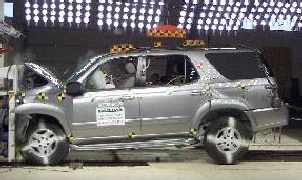
Source: NHTSA 5-Star Safety Ratings (NCAP), tested as the 2004 Toyota Sequoia 4-DR.. Ratings can differ by body style and drivetrain.
2004 Toyota Sequoia MPG & running costs
Source: U.S. EPA / DOE fueleconomy.gov. The EPA lists 2 versions of this model year; combined is shown as a range and the other figures are averages.
What's a 2004 Toyota Sequoia worth?
Estimated 5-year cost to own
A rough guide to what running a 2004 Toyota Sequoia costs over five years and 75,000 miles.
How this is estimated: fuel is the U.S. EPA annual cost at 15,000 miles a year. Depreciation compares today's typical asking price for this model year ($6,133) with the same model 3 model-years older ($4,126), from CarLogs listing data. Not included: insurance, maintenance, repairs, taxes, registration and finance costs. Treat it as a comparison guide, not a quote.
Dimensions & weight
Manufacturer-reported figures for the 2004 Toyota Sequoia. Source: Transport Canada vehicle specifications via NHTSA.
Investigations & service bulletins
NHTSA defect investigations 4
Desiccated Air Bag Inflator Rupture Open
From 2000 through 2017, Takata produced millions of air bag inflators using two types of phase-stabilized ammonium nitrate ("PSAN") propellant -- propellant 2004 and propellant 2004L. After prolonged exposure to high temperature cycles and humidity, inflators using propellant 2004 can degrade, causing the propellant to burn too quickly when ignited. The rapid burning can cause the inflator to rupture during deploymen…
NHTSA #EA21002 · Air Bags · opened Sep 2021Air Bag Inflator Rupture Open
The Office of Defects Investigation (ODI) opened PE14-016 in June 2014 based on six inflator rupture incidents involving consumer owned vehicles produced by five vehicle manufacturers. All six vehicles were operated in Florida or Puerto Rico at the time of the rupture and for the majority of their service life, and were equipped with inflators produced by Takata, a tier-one supplier of automotive air bag systems. Dur…
NHTSA #EA15001 · Air Bags · opened Feb 2015Air Bag Inflator Rupture Closed
The Office of Defects Investigation (ODI) opened PE14-016 in June 2014 based on six inflator rupture incidents involving consumer owned vehicles produced by five vehicle manufacturers. All six vehicles were operated in Florida or Puerto Rico at the time of the rupture and for the majority of their service life, and were equipped with inflators produced by Takata, a tier-one supplier of automotive air bag systems. Dur…
NHTSA #PE14016 · Air Bags · opened Jun 2014 · closed Mar 2015LOWER BALL JOINT FAILURE Closed
IN A LETTER DATED JANUARY 18, 2007, TOYOTA NOTIFIED NHTSA OF A SAFETY DEFECT IN MODEL YEAR (MY) 2004 THROUGH 2006 TOYOTA TUNDRA AND MY 2004 THROUGH 2007 TOYOTA SEQUOIA VEHICLES PRODUCED BETWEEN SEPTEMBER 15, 2003 AND NOVEMBER 17, 2006 (NHTSA RECALL NO. 07V-013). ACCORDING TO TOYOTA, ¿IN THE FRONT SUSPENSION LOWER BALL JOINT ON THE SUBJECT VEHICLES, DUE TO POSSIBLE IMPROPER FINISHING OF THE BALL JOINT, SUCH AS THE ASP…
NHTSA #EA06014 · Suspension · opened Aug 2006 · closed Feb 2007An investigation means NHTSA is examining a possible defect — it is not a recall, and many close without one.
Manufacturer service bulletins 167
Technical notes the manufacturer sent to dealers about known issues and fixes. Useful to mention to a mechanic — they are not recalls and repairs may not be covered. Showing the 10 most recent of 167.
Acid rain results from rainwater or other airborne moisture that become acidic due to industrial chemical impurities in the atmosphere. If these acidic compounds settle on an exposed vehicle, especially the horizontal areas such as the hood, roof, and decklid,…
Bulletin T-SB-0035-24 Rev2 · Structure · Dec 2024To prevent brake rotor rust from forming during transportation and storage, wheel film will be used instead of a cardboard type of anti-rust cover. The purpose of the wheel film is to shield the disc brake rotor from weather elements and initial rust before th…
Bulletin T-SB-0038-24 Rev2 · Structure · Dec 2024The condition known as acid rain is caused by airborne chemicals or particles in the atmosphere, which mix with rainwater, nighttime dew, or high humidity to form acidic compounds. If these contaminants settle and remain on a painted vehicle surface, especiall…
Bulletin T-SB-0039-24 Rev2 · Structure · Dec 2024Toyota vehicles are currently protected with RapgardTM protective film designed to protect the horizontal painted surfaces. This material protects from acid rain, environmental fallout, and rail contamination. Follow the Removal Procedure in this bulletin to r…
Bulletin T-SB-0061-23 Rev2 · Structure · Dec 2024Vehicles may occasionally be subjected to contamination by airborne iron particles shed from railroad tracks, train wheels, exposure to heavy machinery facilities, grinding, welding, etc. This type of contamination can be identified by the presence of small, r…
Bulletin T-SB-0062-23 Rev2 · Structure · Dec 2024Acid rain results from rainwater or other airborne moisture that become acidic due to industrial chemical impurities in the atmosphere. If these acidic compounds settle on an exposed vehicle, especially the horizontal areas such as the hood, roof, and decklid,…
Bulletin T-SB-0035-24 Rev1 · Structure · Jul 2024To prevent brake rotor rust from forming during transportation and storage, wheel film will be used instead of a cardboard type of anti-rust cover. The purpose of the wheel film is to shield the disc brake rotor from weather elements and initial rust before th…
Bulletin T-SB-0038-24 Rev1 · Structure · Jul 2024The condition known as acid rain is caused by airborne chemicals or particles in the atmosphere, which mix with rainwater, nighttime dew, or high humidity to form acidic compounds. If these contaminants settle and remain on a painted vehicle surface, especiall…
Bulletin T-SB-0039-24 Rev1 · Structure · Jul 2024The condition known as acid rain is caused by airborne chemicals or particles in the atmosphere, which mix with rainwater, nighttime dew, or high humidity to form acidic compounds. If these contaminants settle and remain on a painted vehicle surface, especiall…
Bulletin T-SB-0039-24 Rev1 · Structure · Jul 2024To prevent brake rotor rust from forming during transportation and storage, wheel film will be used instead of a cardboard type of anti-rust cover. The purpose of the wheel film is to shield the disc brake rotor from weather elements and initial rust before th…
Bulletin T-SB-0038-24 Rev1 · Structure · Jul 2024Source: NHTSA Office of Defects Investigation, listed for the SEQUOIA RWD/AWD. Model-year data, not specific to one car.
Canadian recalls 6
Transport Canada recall campaigns for the 2004 Toyota Sequoia. Relevant if the car was first sold in, or imported from, Canada.
Airbag
Issue: On certain vehicles, long-term exposure to high absolute humidity and temperature, combined with high temperature cycling, may eventually degrade the propellant contained in the passenger-front airbag. This could cause the airbag to deploy with more force than normal. If the airbag inflator ruptures, fragments could be propelled toward vehicle occupants or cause damage t…
Transport Canada #2019523 · Oct 2019Airbag
On certain vehicles, the passenger (frontal) airbag inflator could produce excessive internal pressure during airbag deployment. Increased pressure may cause the inflator to rupture, which could allow fragments to be propelled toward vehicle occupants, increasing the risk of injury. This could also damage the airbag module, which could prevent proper deployment. Failure of the…
Transport Canada #2016103 · Mar 2016Airbag
On certain vehicles, the passenger (frontal) airbag inflator could produce excessive internal pressure during airbag deployment. Increased pressure may cause the inflator to rupture, which could allow fragments to be propelled toward vehicle occupants, increasing the risk of injury. This could also damage the airbag module, which could prevent proper deployment. Failure of the…
Transport Canada #2015269 · Jun 2015Airbag
On certain vehicles, the passenger (frontal) airbag inflator could produce excessive internal pressure during airbag deployment. Increased pressure may cause the inflator to rupture, which could allow fragments to be propelled toward vehicle occupants, increasing the risk of injury. This could also damage the airbag module, which could prevent proper deployment. Failure of the…
Transport Canada #2015197 · May 2015Steering
On certain vehicles, a manufacturing issue with the front lower ball joint could result in premature wear. If the vehicle is operated for an extended period of time in this condition, the ball joint may eventually experience excessive wear and looseness, resulting in increased steering effort, reduced vehicle self-centering and noise in the front suspension. In extreme cases, w…
Transport Canada #2007014 · Jan 2007Suspension
On certain vehicles, a manufacturing issue with the front lower ball joint could result in premature wear. If the vehicle is operated for an extended period of time in this condition, the ball joint may eventually experience excessive wear and looseness, resulting in increased steering effort, reduced vehicle self-centering and noise in the front suspension. In extreme cases, w…
Transport Canada #2005151 · May 2005Source: Transport Canada Motor Vehicle Safety Recalls Database.
About the Toyota Sequoia
The Toyota Sequoia is a full-size SUV manufactured by Toyota mainly for the North American market since 2000 for the 2001 model year, being derived from the Tundra pickup truck. It is the second largest SUV ever produced under the Toyota brand, after the Japan-exclusive, military-focused Mega Cruiser.
From Wikipedia, licensed CC BY-SA 4.0. Describes the model line in general, not this model year specifically.
2004 Toyota Sequoia trims & engines on record
2004 Toyota Sequoia vehicles on record
2004 Toyota Sequoia SR55TDBT44A94S227068
2004 Toyota Sequoia SR55TDZT34AX4S238413
2004 Toyota Sequoia SR55TDZT34A04S215383
2004 Toyota Sequoia SR55TDZT34A14S232516
2004 Toyota Sequoia SR55TDBT44A84S211377
2004 Toyota Sequoia SR55TDZT34AX4S213379
2004 Toyota Sequoia SR55TDBT44A94S211288
2004 Toyota Sequoia SR55TDZT34A84S213879
2004 Toyota Sequoia Limited5TDZT38A84S237660
2004 Toyota Sequoia SR55TDZT34AX4S231543
2004 Toyota Sequoia SR55TDZT34AX4S212460
2004 Toyota Sequoia SR55TDBT44A54S211689
2004 Toyota Sequoia Limited5TDZT38A04S215135
2004 Toyota Sequoia Limited5TDZT38A94S238557
2004 Toyota Sequoia Limited5TDBT48A64S227345
2004 Toyota Sequoia SR55TDZT34A14S209172
2004 Toyota Sequoia Limited5TDBT48A84S208828
2004 Toyota Sequoia SR55TDZT34A04S209972
2004 Toyota Sequoia SR55TDBT44A74S212925
2004 Toyota Sequoia SR55TDZT34A14S215652
2004 Toyota Sequoia SR55TDBT44A44S224398
2004 Toyota Sequoia Limited5TDBT48A34S218375
2004 Toyota Sequoia SR55TDBT44A64S221860
2004 Toyota Sequoia SR55TDBT44A34S231018