2002 Toyota Solara
Recalls, most-reported problems, crash-test ratings, fuel economy and what a 2002 Toyota Solara is worth — from official NHTSA and EPA data. 3 on record.

2002 Toyota Solara at a glance
Included: that car's specs and build sheet, model-year recall campaigns and a fair price.
2002 Toyota Solara recalls 0
No NHTSA safety-recall campaigns are on record for the 2002 Toyota Solara.
Source: U.S. NHTSA, checked 4 Nov 2026. A campaign covers the model year; to see whether a particular car still needs the repair, check its VIN on NHTSA.gov or ask a franchised dealer.
2002 Toyota Solara common problems
The most-reported problem areas across all 86 owner complaints filed with NHTSA — and what to check before you buy.
2002 Toyota Solara safety ratings
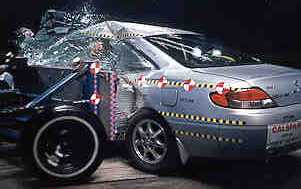 Side barrier test
Source: NHTSA 5-Star Safety Ratings (NCAP), tested as the 2002 Toyota Camry Solara 2-DR. Ratings can differ by body style and drivetrain.
Investigations & service bulletins
NHTSA defect investigations 3
ENGINE SURGING Closed
THE PETITIONER OWNS A MY 2006 TOYOTA CAMRY WITH A 4-CYLINDER ENGINE THAT WAS PURCHASED NEW IN JANUARY 2006. THE PETITIONER ALSO PREVIOUSLY OWNED A MY 2005 CAMRY. HE ALLEGES THAT BOTH VEHICLES EXHIBITED VEHICLE ENGINE SURGING, WHICH HE DESCRIBED AS A SHORT DURATION (1 TO 2 SECOND) INCREASE IN ENGINE SPEED OCCURRING WHILE THE ACCELERATOR PEDAL IS NOT DEPRESSED. IN AN INITIAL INTERVIEW, THE PETITIONER ESTIMATED THAT 6 T…
NHTSA #DP06003 · Vehicle Speed Control · opened Sep 2006 · closed Apr 2007VEHICLE SPEED CONTROL Closed
IN A LETTER DATED JULY 8, 2005, AND AFTER EXPERIENCING TWO INCIDENTS (AND ONE CRASH) WHERE HE ALLEGES HIS MODEL YEAR (MY) 2002 CAMRY ACCELERATED WITHOUT DRIVER INPUT, MR. JORDAN ZIPRIN PETITIONED THE NATIONAL HIGHWAY TRAFFIC SAFETY ADMINISTRATION¿S (NHTSA) OFFICE OF DEFECTS INVESTIGATION (ODI) TO COMMENCE A PROCEEDING TO DETERMINE THE EXISTENCE OF A DEFECT WITHIN THE ETC SYSTEM IN MY 2002 TO 2005 TOYOTA AND LEXUS VEH…
NHTSA #DP05002 · Vehicle Speed Control · opened Aug 2005 · closed Jan 2006THROTTLE CONTROL SYSTEM Closed
THE LEXUS MODELS WERE THE SUBJECT OF DEFECT PETITION (DP) 04-003. TWELVE ODI COMPLAINTS ARE DUPLICATIVE TO TOYOTA REPORTS, INCLUDING THE TWO MINOR CRASHES. THE V6 EQUIPPED SOLARA MODELS HAVE BEEN EXCLUDED BECAUSE THEY DO NOT CONTAIN THE SUBJECT THROTTLE CONTROL SYSTEM. TOYOTA INTRODUCED ELECTRONIC THROTTLE CONTROL (ETC) ON THE SUBJECT VEHICLES BEGINNING IN MODEL YEAR (MY) 2002. ODI OPENED THE INVESTIGATION TO DETERMI…
NHTSA #PE04021 · Vehicle Speed Control · opened Mar 2004 · closed Jul 2004An investigation means NHTSA is examining a possible defect — it is not a recall, and many close without one.
Manufacturer service bulletins 114
Technical notes the manufacturer sent to dealers about known issues and fixes. Useful to mention to a mechanic — they are not recalls and repairs may not be covered. Showing the 10 most recent of 114.
Acid rain results from rainwater or other airborne moisture that become acidic due to industrial chemical impurities in the atmosphere. If these acidic compounds settle on an exposed vehicle, especially the horizontal areas such as the hood, roof, and decklid,…
Bulletin T-SB-0035-24 Rev2 · Structure · Dec 2024To prevent brake rotor rust from forming during transportation and storage, wheel film will be used instead of a cardboard type of anti-rust cover. The purpose of the wheel film is to shield the disc brake rotor from weather elements and initial rust before th…
Bulletin T-SB-0038-24 Rev2 · Structure · Dec 2024The condition known as acid rain is caused by airborne chemicals or particles in the atmosphere, which mix with rainwater, nighttime dew, or high humidity to form acidic compounds. If these contaminants settle and remain on a painted vehicle surface, especiall…
Bulletin T-SB-0039-24 Rev2 · Structure · Dec 2024Toyota vehicles are currently protected with RapgardTM protective film designed to protect the horizontal painted surfaces. This material protects from acid rain, environmental fallout, and rail contamination. Follow the Removal Procedure in this bulletin to r…
Bulletin T-SB-0061-23 Rev2 · Structure · Dec 2024Acid rain results from rainwater or other airborne moisture that become acidic due to industrial chemical impurities in the atmosphere. If these acidic compounds settle on an exposed vehicle, especially the horizontal areas such as the hood, roof, and decklid,…
Bulletin T-SB-0035-24 Rev1 · Structure · Jul 2024To prevent brake rotor rust from forming during transportation and storage, wheel film will be used instead of a cardboard type of anti-rust cover. The purpose of the wheel film is to shield the disc brake rotor from weather elements and initial rust before th…
Bulletin T-SB-0038-24 Rev1 · Structure · Jul 2024The condition known as acid rain is caused by airborne chemicals or particles in the atmosphere, which mix with rainwater, nighttime dew, or high humidity to form acidic compounds. If these contaminants settle and remain on a painted vehicle surface, especiall…
Bulletin T-SB-0039-24 Rev1 · Structure · Jul 2024Acid rain results from rainwater or other airborne moisture that become acidic due to industrial chemical impurities in the atmosphere. If these acidic compounds settle on an exposed vehicle, especially the horizontal areas such as the hood, roof, and decklid,…
Bulletin T-SB-0035-24 Rev1 · Structure · Jul 2024To prevent brake rotor rust from forming during transportation and storage, wheel film will be used instead of a cardboard type of anti-rust cover. The purpose of the wheel film is to shield the disc brake rotor from weather elements and initial rust before th…
Bulletin T-SB-0038-24 Rev1 · Structure · Jul 2024The condition known as acid rain is caused by airborne chemicals or particles in the atmosphere, which mix with rainwater, nighttime dew, or high humidity to form acidic compounds. If these contaminants settle and remain on a painted vehicle surface, especiall…
Bulletin T-SB-0039-24 Rev1 · Structure · Jul 2024Source: NHTSA Office of Defects Investigation, listed for the SOLARA. Model-year data, not specific to one car.